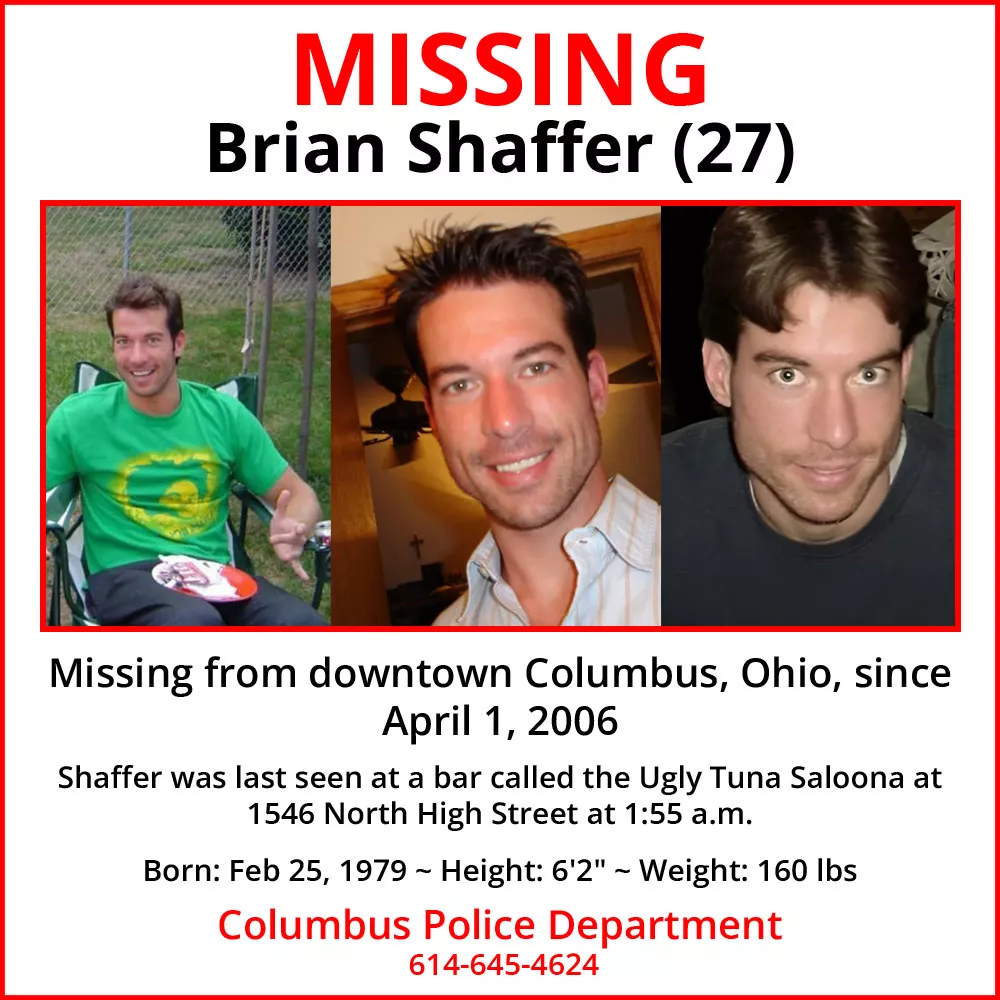
The bar where Brian Shaffer disappeared
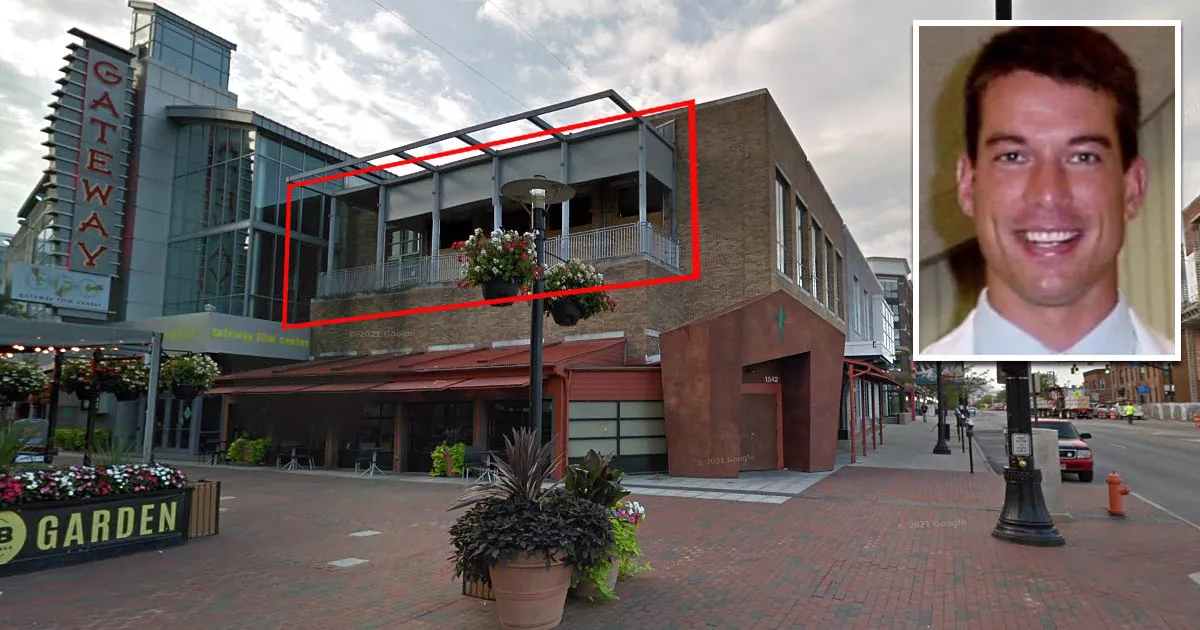
This is the location where Brian Shaffer went missing.
It is situated at 1546 North High Street in Columbus, Ohio.
At the time of his disappearance, the second floor of this building was occupied by the Ugly Tuna Saloona.

The 27-year-old Ohio State University medical student was last seen in the foyer outside the bar during the early hours of Saturday, April 1, 2006.

Disappearance
Shaffer and William "Clint" Florence had visited several bars that Friday night before meeting up with their friend, Meredith Reed. The group arrived at the Ugly Tuna Saloona around 1:15 a.m.
A surveillance camera captured them walking up the escalator.

While they were at the bar, Shaffer wandered out into the foyer and began talking to two women named Brightan Zatko and Amber Ruicin.

The conversation took place at 1:55 a.m., just five minutes before closing time. By that point, patrons were beginning to leave the building.
Zatko and Ruicin described the interaction as normal, lighthearted, and typical for a night out.
After the conversation, Zatko and Ruicin left, and Shaffer appeared to walk back toward the bar.

This was the last known sighting of him.

When the venue closed at 2 a.m., Shaffer's friends called his phone and checked the bathrooms before looking for him outside.
After failing to find him, they assumed he had walked back to his apartment, as he had a habit of leaving bars without saying anything. They did not spend much time searching for him because he lived nearby.
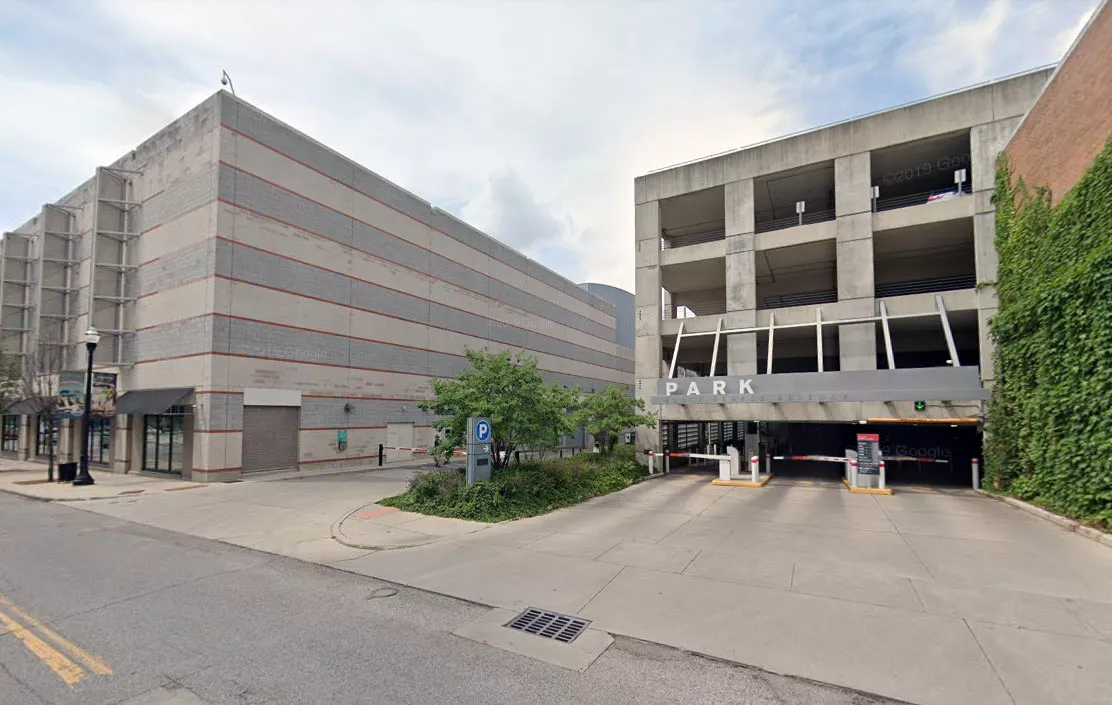
Florence and Reed waited a few minutes before leaving in Reed's car. Surveillance footage showed them exiting the Gateway garage at 2:09 a.m.
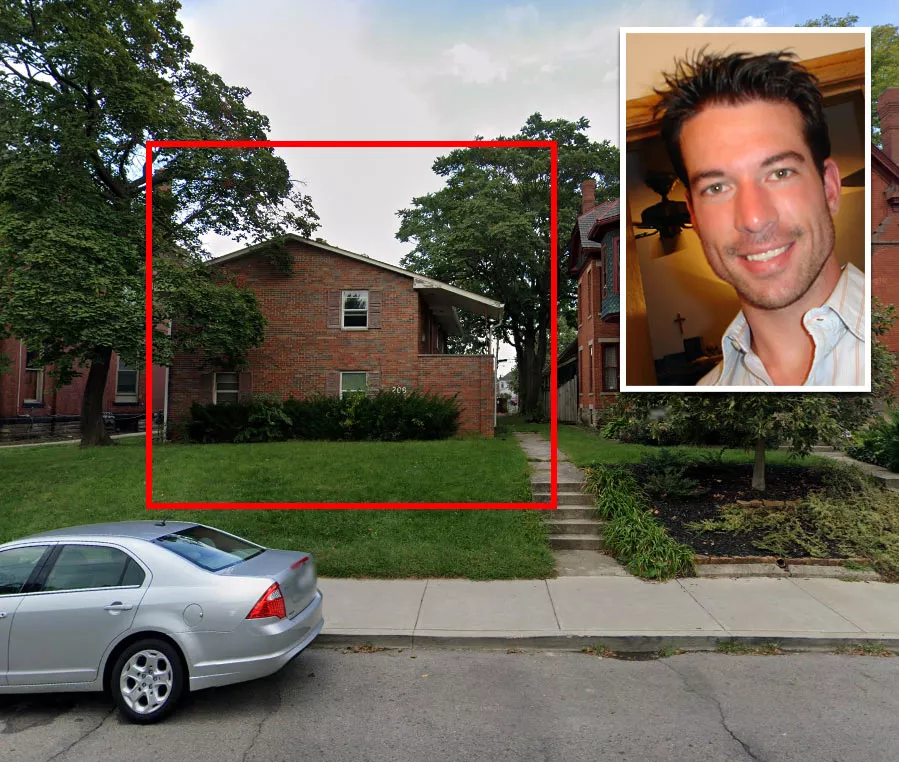
Google Maps shortcut
Investigation
At least 48 hours passed before the police became involved.
Shaffer wasn't reported missing until Monday, April 3, 2006. His girlfriend, Alexis Waggoner, had grown concerned over the weekend after he failed to respond to her phone calls.
On Sunday, she notified his father, Randy Shaffer. Randy checked his son's apartment but found nothing out of the ordinary.
Waggoner and Shaffer were scheduled to fly to Miami the following morning. When he failed to show up at the airport, Waggoner and his family alerted the Columbus Police Department.
A review of the surveillance footage failed to find any sign of him exiting the bar. The lead investigator, Sergeant John Hurst, said there were several "blind spots."
One of the cameras was programmed to periodically pan from side to side. Hurst acknowledged that the panning motion may have missed the exact moment when Shaffer left the building. Additionally, there were other ways out that were not covered.
One of the staff service exits was not under surveillance. However, to reach it, he would have had to get past the two security guards stationed near the top of the stairs and then make his way through a construction site. The site did not contain holes, wet concrete, or other hazards that Shaffer could have fallen into, as the foundations and floors had already been laid.
It was a largely finished area. The remaining work involved constructing the partition walls between the retail units.

The cadaver dogs that the police used to search the building failed to find anything.
There are also reports that the fire exit was not fitted with an active alarm in 2006. Although it had a camera, the tape had already been recorded over by the time investigators checked the footage, as many such systems automatically overwrite older recordings.
Google Maps shortcut
Shaffer's disappearance puzzled investigators.
The tips they received from the public led nowhere. There was no activity on his phone, credit cards, or bank accounts to suggest that he had run away.
Shaffer's mother, Renee, died of cancer three weeks before his disappearance, but friends and family said he was in good spirits and that there wasn't any indication that he was depressed.
This part of Columbus had a reputation for being a high-crime area. The police checked dumpsters in the neighborhood using cadaver dogs. However, by that stage, a number of days had passed since his disappearance. The Olentangy River, vacant buildings, homeless shelters, and local hospitals were also searched. Investigators were confident that he didn't fall into the river, as the section that runs through the city is approximately 2-3 feet deep.

Aftermath
In September 2006, Waggoner called Shaffer's phone, and it rang instead of going to voicemail. A ping from the phone was detected at a cell tower in Hilliard, 14 miles northwest of Columbus, but the phone company said it was likely a computer glitch.
Shaffer's father, Randy, died in September 2008, when a tree limb fell on him in his yard during a windstorm in Baltimore, Ohio. A message on his online obituary signed "Love, Brian (U.S. Virgin Islands)" was traced to a public computer in Franklin County and dismissed as a hoax.
During the investigation, Shaffer's friend, William "Clint" Florence, refused to take a polygraph. While his refusal is a common topic in online discussions, polygraph tests are widely recognized by courts as scientifically unreliable, and refusing a polygraph on counsel advice is a standard legal decision rather than proof of guilt.[2][1] Most lawyers will tell clients to skip the test to avoid mistakes.[3]
For example, the husband of murder victim Vicki Wegerle failed two tests despite his innocence. He remained the lead suspect in the case until investigators arrested serial killer Dennis Rader in 2005.
Address
The address and GPS coordinates for the bar are as follows:
- This Location
- View Photo
- View Photo
Address
1546 N High Street, Columbus, OH 43201, USA
GPS Coordinates
39.994010, -83.006497
39°59'38.44"N 83°00'23.39"W
Get Directions
Open this location in your preferred maps app:
Area Information
The area lies to the southeast of the Ohio State University campus.
📍 It is approximately 270 feet south of the intersection of North High Street and East 11th Avenue.
References
Sources consulted for this entry.
- National Academies of Sciences, Engineering, and Medicine, The Polygraph and Lie Detection, The National Academies Press, 2003. Accessed 9 August 2026.
- Do "lie detectors" work?, American Psychological Association (APA), 2004. Accessed 9 August 2026.
- Why You Should Never Agree to a Police Polygraph Test, Law office of James R. Snell, Jr., 2025. Accessed 9 August 2026.
Closest Locations
Other locations that are relatively close to this address:

Crime Location · Plain City, Ohio
The cemetery where Jessica Keen was murdered
Roughly 17 miles away